

DASSO
Welcome
The editorial board welcomes you to Missouri State University's electronic journal
Defense and Strategic Studies Online (DASSO).
In the inaugural issue from Fall 2024, the Board offers an introduction to Mo State's Defense and Strategic Studies (DSS) program and to its flagship publication.
Please enjoy our latest issue and archives below.
In the inaugural issue from Fall 2024, the Board offers an introduction to Mo State's Defense and Strategic Studies (DSS) program and to its flagship publication.
Please enjoy our latest issue and archives below.

Vol. 2, No. 4
A Colloquy on "Tailoring" Nuclear Deterrence
Part I: Conceptual Challenges of “Tailoring” Nuclear Deterrence
Dr. Christopher Ford looks at the challenge of developing and implementing a nuclear deterrence policy based upon the idea of "tailoring" deterrent strategies to the particularities of the adversary. A powerful and influential concept in U.S. nuclear weapons policy for many years, tailoring has conceptual and practical challenges and weaknesses, Ford argues, noting that its utility may be greater in shaping policy and doctrine than in driving underlying force posture decisions.
Read Part I - Ford (.pdf)
Part II: Fundamental Deterrence Challenges and Tailoring
Responding to Ford's essay, Dr. Keith Payne discusses the ideas informing tailored deterrence and recounts its history in American nuclear policy. One of the country's most prominent experts on tailored deterrence, Payne discusses several challenges associated with the concept, such as the false assumption that any adversary can be reliably deterred.
Read Part II - Payne (.pdf)
Dr. Christopher Ford looks at the challenge of developing and implementing a nuclear deterrence policy based upon the idea of "tailoring" deterrent strategies to the particularities of the adversary. A powerful and influential concept in U.S. nuclear weapons policy for many years, tailoring has conceptual and practical challenges and weaknesses, Ford argues, noting that its utility may be greater in shaping policy and doctrine than in driving underlying force posture decisions.
Read Part I - Ford (.pdf)
Part II: Fundamental Deterrence Challenges and Tailoring
Responding to Ford's essay, Dr. Keith Payne discusses the ideas informing tailored deterrence and recounts its history in American nuclear policy. One of the country's most prominent experts on tailored deterrence, Payne discusses several challenges associated with the concept, such as the false assumption that any adversary can be reliably deterred.
Read Part II - Payne (.pdf)
Vol. 2, No. 4
The Changing Character of War
From the Great War to Ukraine: Adapting to the Changing Character of War
Paul Dodge recounts the history of Spencer Cosby, a U.S. Army Major who reported first-hand from the trenches during early portions of the First World War. Cosby sent detailed dispatches back to Washington about the nature and conditions of that conflict before the United States joined. His reports made clear that the Army was unprepared for this new manifestation of combat, but American leaders failed to listen to his warnings.
Dodge uses Cosby's example as a cautionary tale about the challenges of institutional preparedness, considering what lessons it can offer U.S. planners seeking to learn lessons from the Ukraine conflict today.
Paul Dodge recounts the history of Spencer Cosby, a U.S. Army Major who reported first-hand from the trenches during early portions of the First World War. Cosby sent detailed dispatches back to Washington about the nature and conditions of that conflict before the United States joined. His reports made clear that the Army was unprepared for this new manifestation of combat, but American leaders failed to listen to his warnings.
Dodge uses Cosby's example as a cautionary tale about the challenges of institutional preparedness, considering what lessons it can offer U.S. planners seeking to learn lessons from the Ukraine conflict today.

Celebrating 20 years of DSS in D.C.
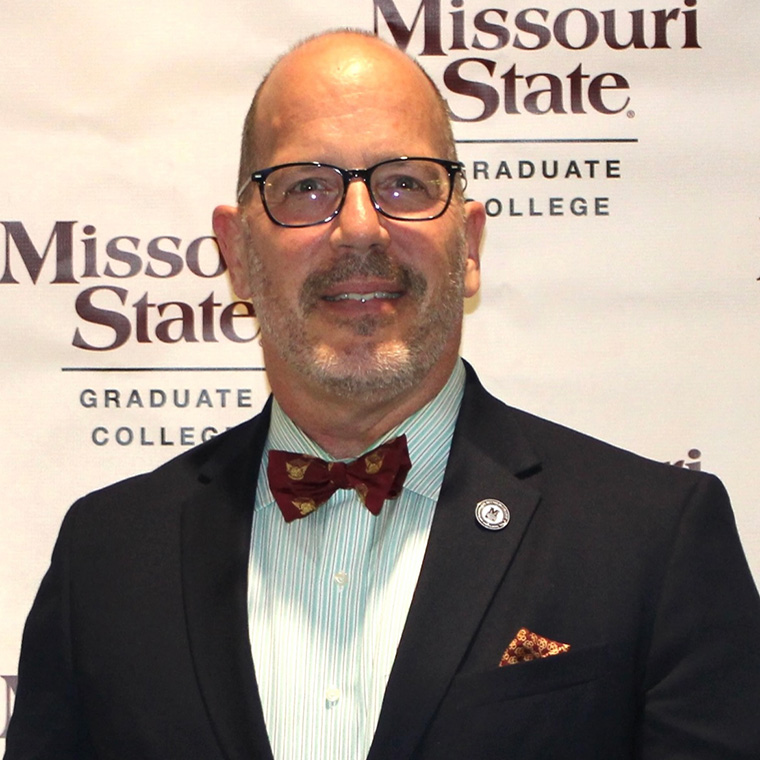
Defense and Strategic Studies at MSU: Security Sensibility and Strategic DNA
In this essay, Christopher Ford provides a brief overview of DSS' history, discussing in particular the special flavor and approach that have made DSS a unique and valuable contributor to national security education for more than four decades.
Read full paper (.PDF)
In this essay, Christopher Ford provides a brief overview of DSS' history, discussing in particular the special flavor and approach that have made DSS a unique and valuable contributor to national security education for more than four decades.
Read full paper (.PDF)
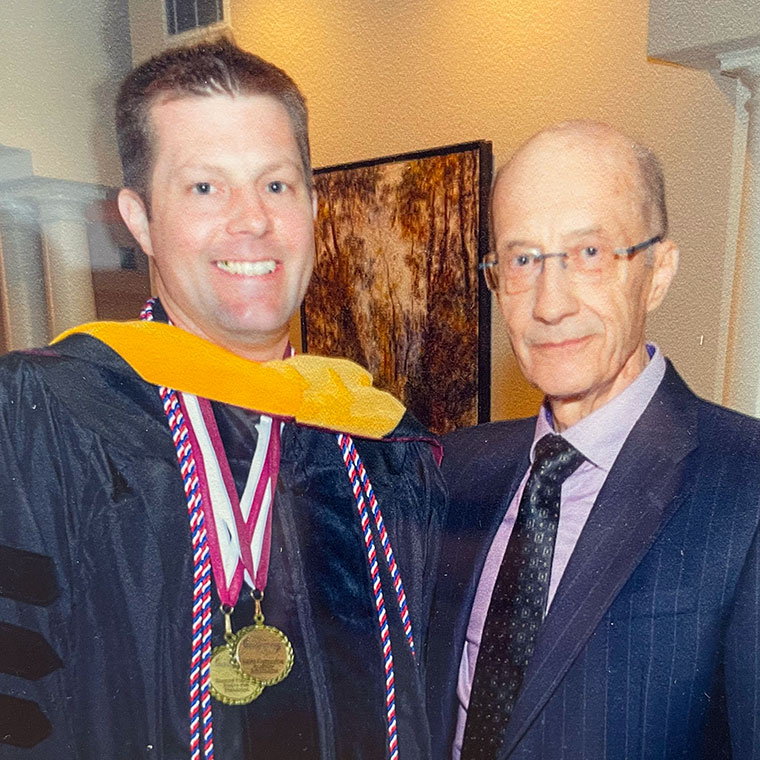
My Journey with the Defense and Strategic Studies Program
DSS' current director, John Rose, tells the story of his long personal involvement with DSS, which began when he was a student in the program and continues to this day. He also describes the current range of DSS programming and activities, its educational partnerships in the national security community, and its success in expanding into doctoral education.
Read full paper (.PDF)
DSS' current director, John Rose, tells the story of his long personal involvement with DSS, which began when he was a student in the program and continues to this day. He also describes the current range of DSS programming and activities, its educational partnerships in the national security community, and its success in expanding into doctoral education.
Read full paper (.PDF)
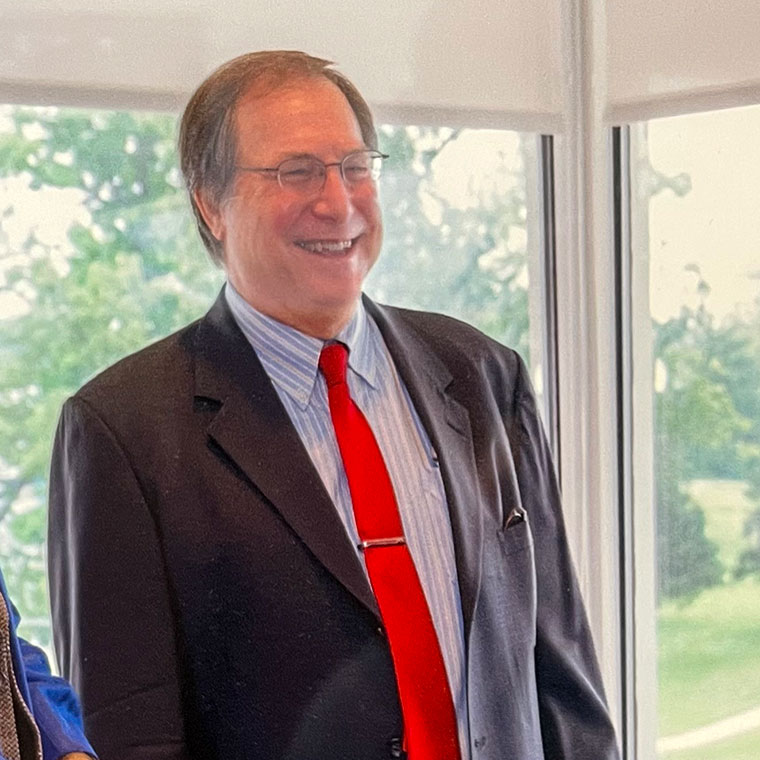
Defense and Strategic Studies: A Brief History
In this essay, the man who brought DSS to Washington, D.C., Keith B. Payne, looks back across the program's long life, narrating the history of its move to what is now Missouri State University and then its relocation to Washington two decades ago.
Read full paper (.PDF)
In this essay, the man who brought DSS to Washington, D.C., Keith B. Payne, looks back across the program's long life, narrating the history of its move to what is now Missouri State University and then its relocation to Washington two decades ago.
Read full paper (.PDF)
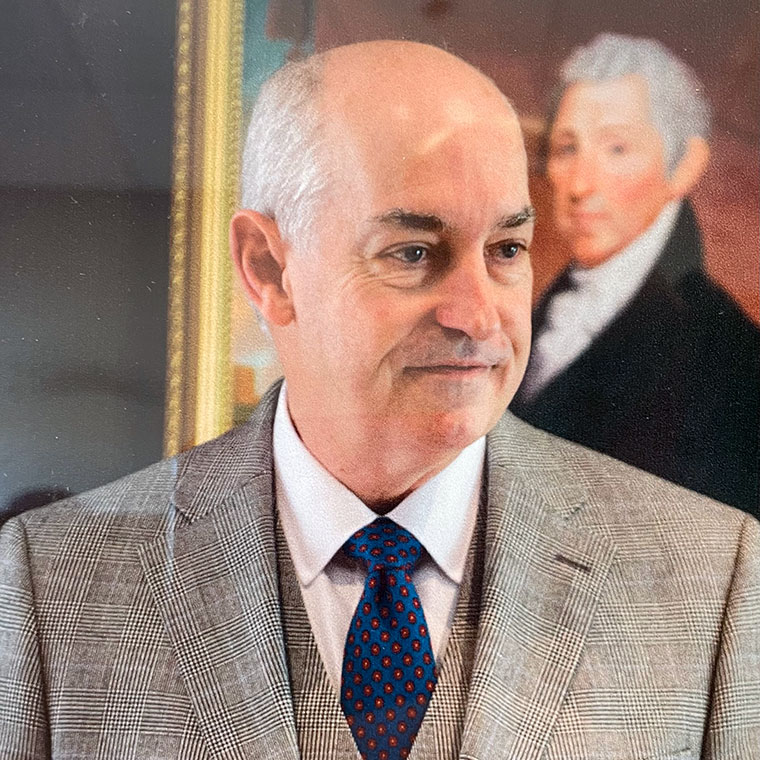
Transcending the Academic Haze, or How I Learned to Learn about the Bomb
This essay reprints reflections on DSS' founder, William Van Cleave, from former student and DSS professor J.D. Crouch, putting the man and his program in historical context and offering Crouch's view of its impact in the U.S. national security community.
Read full paper (.PDF)
This essay reprints reflections on DSS' founder, William Van Cleave, from former student and DSS professor J.D. Crouch, putting the man and his program in historical context and offering Crouch's view of its impact in the U.S. national security community.
Read full paper (.PDF)
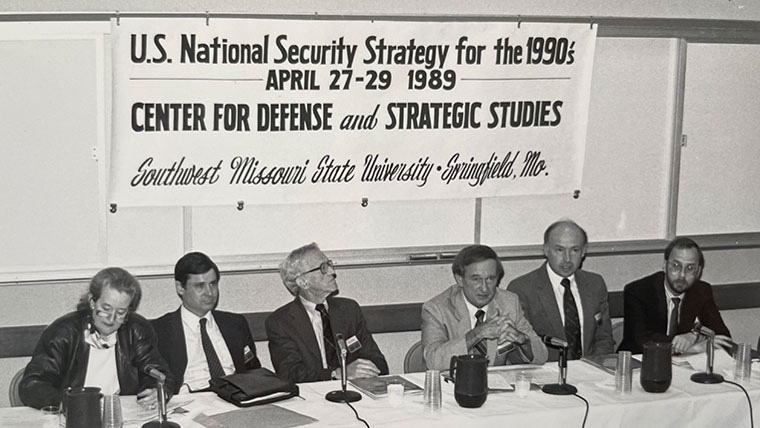
“By National Security Professionals, for National Security Professionals”
In this note, Christopher Ford describes the remarkable backgrounds of DSS' current faculty, providing a list of the various positions they have held in various parts of the U.S. national security enterprise that illustrates the unique experience upon which DSS programs draw in educating students in its graduate certificate, master's and doctoral programs.
Read full paper (.PDF)
In this note, Christopher Ford describes the remarkable backgrounds of DSS' current faculty, providing a list of the various positions they have held in various parts of the U.S. national security enterprise that illustrates the unique experience upon which DSS programs draw in educating students in its graduate certificate, master's and doctoral programs.
Read full paper (.PDF)
Join the discussion and share your views
Are you a member or friend of the Missouri State University community with an interest in defense and strategic studies and who has something thoughtful to contribute to public discourse on such topics in this essay format?
Contact DASSO’s Editorial Board at DASSO@MissouriState.edu.
Archives
Access more papers and essays from DSS faculty, students, and guest authors.
2026 papers
Read DASSO - Vol. 2, No. 4 (.pdf)